top of page

Discover the Latest in Biomedical Research Innovation
Search


The Wound Healing (Scratch) Assay Tool Labs Have Been Waiting For: CLYTE Releases CytCut!
Stop letting inconsistent pipette scratches ruin your wound-healing assays. Manual methods waste time and money, while automation costs $20k+. The solution is here: CytCut by CLYTE. This simple, robust tool creates uniform scratches in 10-20 seconds with <5% CV precision for a $199 pre-order. It's fully autoclavable, requires no training, and pays for itself by preventing a single failed plate. Standardize your data and pre-order CytCut now.
Oct 27, 20256 min read


Tissue Falling Off The Slide During IHC: Protocol to Preventing Tissue Detachment
Stop the frustration of watching your precious tissue sections float away during an IHC run. Losing samples is one of the most common and costly failures in a histology lab, but it is almost entirely avoidable. It's not just "bad slides"—your entire protocol, from fixation and processing to your drying time and antigen retrieval technique, plays a crucial role. Learn why a 20-minute bake isn't enough, high-pH buffers problems, and the tricks to ensure your tissue stays firmly
Oct 24, 20255 min read


Publication-Ready Data: Making A Grouped Bar Chart with Error Bars in GraphPad Prism
Stop letting poor data visualization undermine your research! Master the creation of powerful, publication-ready grouped bar charts with error bars in GraphPad Prism. This ultimate guide for biomedical scientists details crucial steps, from setting up the correct Grouped Data Table (replicates vs. mean/SEM) to adding transparent individual data points. Elevate your figures and ensure your scientific story is told clearly and accurately for maximum impact.
Oct 22, 20254 min read
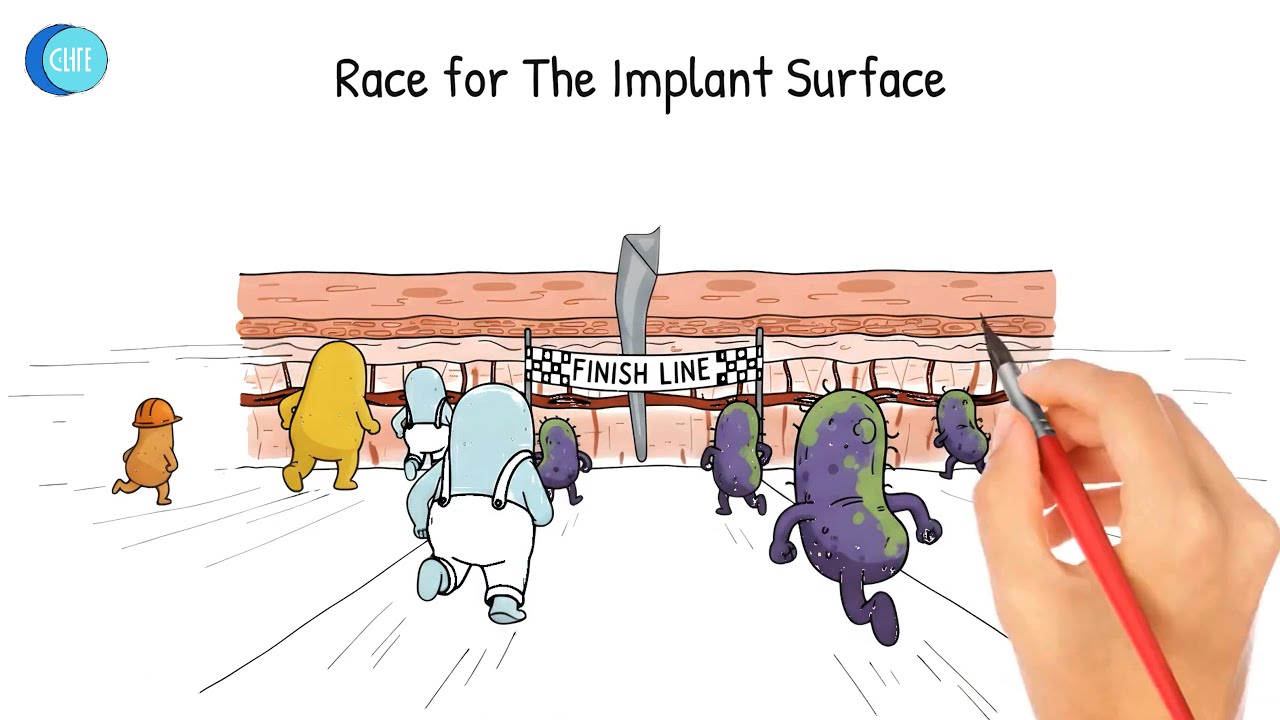
Implant Failure Explained: The Critical "Race for The Surface"
Why do so many medical implants fail? It's not a slow rejection; it's a high-speed "race for the surface" decided in minutes. As soon as an implant enters the body, your own cells and dangerous bacteria sprint to claim the new territory. If bacteria win, they build "biofilms"—slimy fortresses that antibiotics can't penetrate, leading to infection and rejection. This article explores this critical showdown and the new science being used to "tilt the track" in favor of healing.
Oct 20, 20253 min read


No Colonies After Bacterial Transformation? Your Ultimate Troubleshooting Guide
Staring at empty agar plates after a bacterial transformation is a frustrating experience for any researcher. But don't despair! This in-depth troubleshooting guide and FAQ will help you pinpoint the cause of your failed experiment. We'll explore common issues with competent cells, plasmid DNA, and your transformation protocol. With our expert tips and a systematic approach, you'll be on your way to a successful transformation and a plate full of colonies in no time.
Oct 17, 20256 min read


10 Reasons Your Cells Won't Attach to the Flask : Low Adhesion and How to Fix It!
Are your cells refusing to stick to the flask? You're not alone. This frustrating problem can derail your experiments and leave you scratching your head. But fear not! Our in-depth guide explores the top 10 reasons for poor cell attachment, from problems with your culture vessel to issues with cell health, media, and more. We'll help you troubleshoot the adhesion problem and get your cells back to doing what they do best: growing and dividing.
Oct 15, 20257 min read


Protecting the Precious Cells: What does bacterial contamination in cell culture look like?
Is your cell culture media suddenly cloudy or yellow? Do you see tiny, shimmering specks between your cells under the microscope? These are classic signs of bacterial contamination. Our in-depth visual guide explores the macroscopic and microscopic clues that reveal a bacterial invasion. Learn to differentiate motile bacteria from simple cell debris and understand why daily visual checks are your best defense against compromised experiments. Protect your cells by learning to
Oct 10, 20256 min read

Sophie 2.0 Unveiled: Most Advanced AI in Healthcare research, Ending the Protocol Quest
The frustrating hunt for the perfect lab protocol is officially over. We are thrilled to announce the launch of Soφ 2.0, a revolutionary update to our AI lab assistant. We’ve supercharged Soφ to be more than just a protocol finder; it's now a comprehensive research partner. Featuring a faster, smarter engine and a vastly expanded knowledgebase, Soφ 2.0 introduces game-changing capabilities.
Oct 8, 20253 min read
bottom of page