top of page

Discover the Latest in Biomedical Research Innovation
Search


Mastering Subculture: A Detailed Protocol for Passaging Adherent Cells
Master a fundamental lab technique! Passaging adherent cells is essential for healthy, continuous cell cultures, but it's a process with many critical steps. Our comprehensive protocol, synthesized from 8 expert sources, guides you through every stage. Learn the 'why' behind washing with PBS, the right way to trypsinize and neutralize, and the calculations for perfect seeding density. Move beyond basic subculturing and ensure the viability and success of your cell lines with
Nov 21, 20254 min read


Mastering the Plasmid Miniprep: A Step-by-Step Protocol for High-Yield DNA
Unlock the secrets of the most essential technique in molecular biology! This comprehensive guide to the plasmid miniprep protocol takes you from a single bacterial colony to pure, high-yield DNA. We dive deep into the "3-buffer magic" of alkaline lysis and provide a detailed, step-by-step protocol for both modern silica spin-columns and traditional precipitation methods. Learn to troubleshoot common problems like low yield and gDNA contamination, and get your DNA ready for a
Nov 19, 20255 min read


Bonferroni vs. FDR: Multiple Hypothesis Testing in Biomedical Data Analysis
Running 10,000 gene expression tests? You might get 500 false positives by random chance. This is the "multiple hypothesis testing problem," and it's a critical flaw in modern biomedical research. The traditional fix, the Bonferroni correction, is so strict it often causing you to miss real discoveries. But a more powerful, modern method—the False Discovery Rate (FDR)—offers a revolutionary trade-off: what if you could control the proportion of false positives, not just the c
Nov 17, 20254 min read


Guide to Mycoplasma-Free Cultures: Mycoplasma Testing Protocol
Mycoplasma contamination is the silent killer of research. This invisible threat doesn't make your media cloudy, but it systematically destroys the validity of your experiments by altering cell metabolism and gene expression. How do you fight an enemy you can't see? This article provides a complete, SEO-optimized protocol for Mycoplasma testing in cell culture. We dive into the "why" and "how" of detection, comparing the gold standard culture method with rapid PCR and visual
Nov 14, 20258 min read


From Tissue to Transcript: The Protocol for Trizol RNA Extraction
Trizol extraction is the gold standard, but working with tissue requires mastering the critical homogenization step. This definitive guide summarizes expert protocols for success, from liquid nitrogen grinding to mechanical lysis. We detail the step-by-step Trizol protocol—phase separation, precipitation, and washing—and provide essential troubleshooting tips from real labs to help you avoid common pitfalls like salt contamination and poor solubility.
Nov 12, 20256 min read


From Data to Display: A Complete Tutorial on the Kaplan-Meier Survival Curve
What's the best way to visualize time-to-event data in biomedical research? Enter the Kaplan-Meier survival curve. This powerful tool does more than just plot survival; it brilliantly handles the number one challenge in clinical studies: incomplete or "censored" data. This complete tutorial breaks down everything you need to know. We guide you step-by-step through the calculation, how to interpret the "step" plot, and how to use the log-rank test to see if your results are di
Nov 10, 20257 min read


Troubleshooting PCR: Why Your Negative Control Has a Band (And How to Fix It)
Seeing an unexpected band in your PCR negative control (NTC) is a frustrating problem that invalidates your results. But what does it mean? This article dives deep into the two most likely culprits: DNA contamination and primer-dimers. Explore contamination from reagents, equipment, or even the air can introduce unwanted DNA, and why your primers might be binding to each other. Most importantly, we provide a step-by-step action plan to decontaminate your workspace and get cle
Nov 7, 20255 min read


Protocol for Small RNA Northern Blots: High-Sensitivity, High-Resolution
This definitive guide to Northern blotting synthesizes expert protocols for detecting miRNA, siRNA, and piRNA with unmatched sensitivity. We detail the critical steps, from high-resolution Urea-PAGE to the 50-fold sensitivity boost of EDC chemical cross-linking. Learn to master probe labeling (both 32P and non-radioactive biotin methods), optimize transfer, and troubleshoot common issues like multi-probe detection. This is your all-in-one resource.
Nov 5, 20255 min read


Protocol for High-Efficiency Heat Shock Bacterial Transformation
Unlock the power of genetic engineering with the heat shock transformation method! Learn the precise science behind creating chemically competent cells using calcium chloride and the critical 42 C temperature pulse that forces bacteria to take up life-changing plasmid DNA. Master the detailed protocol steps—from chilling on ice to the crucial outgrowth phase—to achieve maximum transformation efficiency in your molecular cloning experiments and revolutionize protein production
Oct 31, 20255 min read


Standard Deviation vs. Confidence Interval: The Essential Guide for Biomedical Data Analysis
In biomedical research, confusing standard deviation (SD) and confidence intervals (CI) is a common pitfall. Do you know the difference? One describes the spread of your sample data, while the other estimates the precision of a finding for the entire population. This guide breaks down the essential distinction, showing you how to use SD to describe your sample and CIs to infer your results, ensuring your data analysis is precise and powerful.
Oct 29, 20256 min read


Tissue Falling Off The Slide During IHC: Protocol to Preventing Tissue Detachment
Stop the frustration of watching your precious tissue sections float away during an IHC run. Losing samples is one of the most common and costly failures in a histology lab, but it is almost entirely avoidable. It's not just "bad slides"—your entire protocol, from fixation and processing to your drying time and antigen retrieval technique, plays a crucial role. Learn why a 20-minute bake isn't enough, high-pH buffers problems, and the tricks to ensure your tissue stays firmly
Oct 24, 20255 min read


Publication-Ready Data: Making A Grouped Bar Chart with Error Bars in GraphPad Prism
Stop letting poor data visualization undermine your research! Master the creation of powerful, publication-ready grouped bar charts with error bars in GraphPad Prism. This ultimate guide for biomedical scientists details crucial steps, from setting up the correct Grouped Data Table (replicates vs. mean/SEM) to adding transparent individual data points. Elevate your figures and ensure your scientific story is told clearly and accurately for maximum impact.
Oct 22, 20254 min read
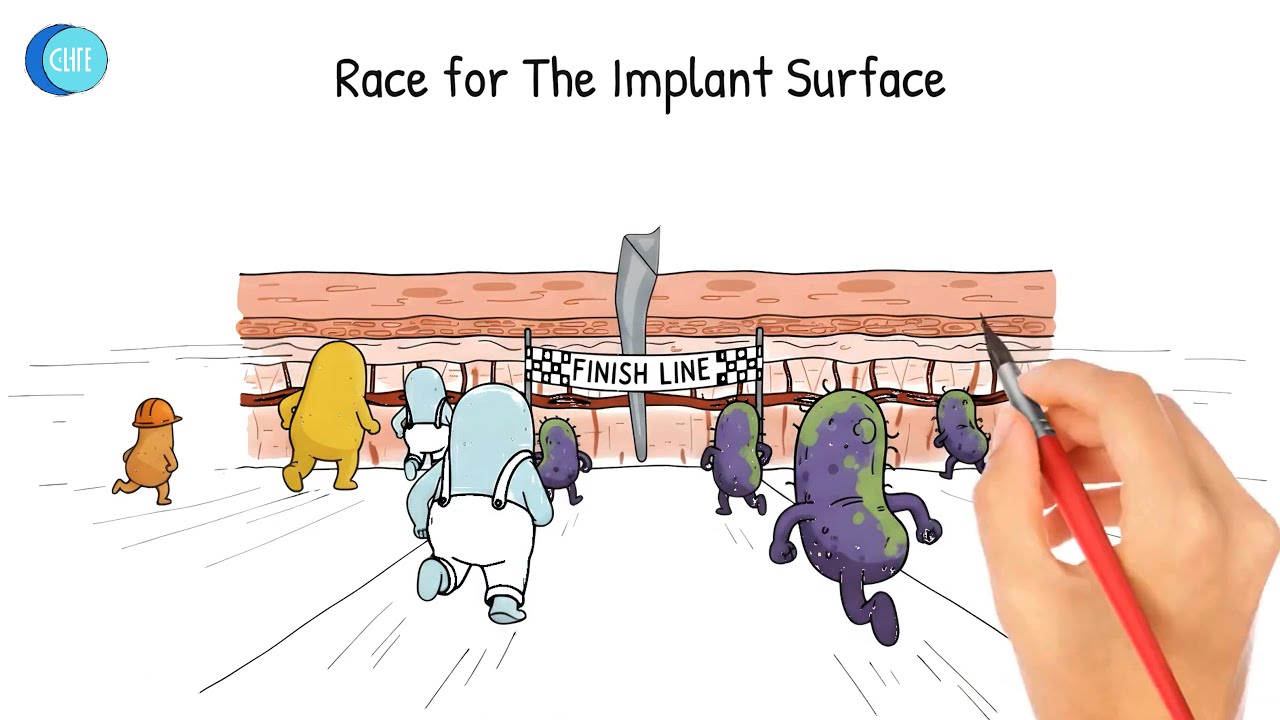
Implant Failure Explained: The Critical "Race for The Surface"
Why do so many medical implants fail? It's not a slow rejection; it's a high-speed "race for the surface" decided in minutes. As soon as an implant enters the body, your own cells and dangerous bacteria sprint to claim the new territory. If bacteria win, they build "biofilms"—slimy fortresses that antibiotics can't penetrate, leading to infection and rejection. This article explores this critical showdown and the new science being used to "tilt the track" in favor of healing.
Oct 20, 20253 min read


No Colonies After Bacterial Transformation? Your Ultimate Troubleshooting Guide
Staring at empty agar plates after a bacterial transformation is a frustrating experience for any researcher. But don't despair! This in-depth troubleshooting guide and FAQ will help you pinpoint the cause of your failed experiment. We'll explore common issues with competent cells, plasmid DNA, and your transformation protocol. With our expert tips and a systematic approach, you'll be on your way to a successful transformation and a plate full of colonies in no time.
Oct 17, 20256 min read


10 Reasons Your Cells Won't Attach to the Flask : Low Adhesion and How to Fix It!
Are your cells refusing to stick to the flask? You're not alone. This frustrating problem can derail your experiments and leave you scratching your head. But fear not! Our in-depth guide explores the top 10 reasons for poor cell attachment, from problems with your culture vessel to issues with cell health, media, and more. We'll help you troubleshoot the adhesion problem and get your cells back to doing what they do best: growing and dividing.
Oct 15, 20257 min read


Protecting the Precious Cells: What does bacterial contamination in cell culture look like?
Is your cell culture media suddenly cloudy or yellow? Do you see tiny, shimmering specks between your cells under the microscope? These are classic signs of bacterial contamination. Our in-depth visual guide explores the macroscopic and microscopic clues that reveal a bacterial invasion. Learn to differentiate motile bacteria from simple cell debris and understand why daily visual checks are your best defense against compromised experiments. Protect your cells by learning to
Oct 10, 20256 min read


Deep Dive into the Transwell Migration and Invasion Assay
Discover the power of the Transwell migration and invasion assay, a fundamental tool in cell biology. This article delves into the principles, protocols, and applications of this versatile technique, explaining how it allows scientists to study cell movement in detail. Whether you're a seasoned researcher or new to the field, our comprehensive guide will provide you with the knowledge you need to master the Transwell assay and unlock the secrets of cell migration and invasion
Oct 6, 20258 min read


Break the Ice: How to Thaw Frozen Cells for Optimal Viability
Unlock the full potential of your cryopreserved cells with our definitive guide to thawing. From the crucial first moments in the water bath to the final plating, we'll walk you through the essential steps and best practices to ensure maximum cell viability and a successful start to your experiments. Learn the secrets to reviving your frozen cells and set your research up for success.
Oct 3, 20254 min read


Gibson Assembly vs Golden Gate: A Complete Guide to Choosing the Right Cloning Method
Gibson Assembly and Golden Gate Cloning are two of the most powerful techniques in a molecular biologist's toolbox. While both methods allow for the seamless assembly of multiple DNA fragments, they operate on different principles and are suited for different applications. This article breaks down the pros and cons of each, helping you choose the right cloning strategy for your research. Discover the key differences in their mechanisms, efficiency, and costs to optimize your
Oct 1, 20254 min read


The Benchtop Blueprint: A Detailed Guide to Quantitative RT-PCR (qRT-PCR) Protocols
Dive into the world of gene expression analysis with our in-depth guide to Quantitative RT-PCR (qRT-PCR) protocols. Discover the power of this technique to unlock the secrets of RNA and learn the step-by-step process for obtaining accurate and reproducible results. From one-step vs. two-step assays to essential tips for experimental design and data analysis, this article is your ultimate resource for mastering qRT-PCR.
Sep 29, 20259 min read
bottom of page