top of page

Discover the Latest in Biomedical Research Innovation
Search


Two-Way ANOVA in SPSS: A Step-by-Step SOP for Interaction Plots and Simple Effects
A two-way ANOVA in SPSS takes one menu and five dialogs, and three of their defaults can quietly mislead you: the Post Hoc button compares the wrong means after an interaction, the right comparisons are uncorrected unless you change a dropdown, and the unequal-variance tests never run in a two-factor model. This SOP runs the analysis correctly, from data entry to a reportable result.
5 days ago6 min read


The Delta Delta Ct Method Demystified: Calculating Relative Gene Expression Step by Step
The delta delta Ct method turns two Cq values per sample into a fold change in a minute of arithmetic. The two mistakes it hides take longer to spot: efficiency that is not quite 100%, which inflates your biggest results, and statistics run on fold changes instead of Cq values. This SOP runs from raw Cq to a fold change with a correct, asymmetric confidence interval.
Oct 76 min read


Two-Way ANOVA vs Repeated Measures ANOVA vs Mixed-Effects Models: Which One Fits Your Experiment?
If every measurement comes from a different animal, use ordinary two-way ANOVA. If the same animals are measured at every time point with nothing missing, use repeated measures ANOVA. If even one value is missing, use a mixed-effects model. Here is how to match the model to your design, what each mistake costs, and how to set each one up in GraphPad Prism.
Oct 55 min read


Reference Genes for qPCR: How to Choose and Validate Them (Beyond Just Using GAPDH)
If your treatment raises GAPDH by half, every target you normalize to it looks a third lower, even if nothing changed. Few labs check: studies use 1.2 reference genes on average, and only 15% test a panel first. This guide covers choosing candidates from different pathways, validating them with geNorm and NormFinder, and what MIQE 2.0 now asks you to report.
Sep 305 min read


Two-Way ANOVA Interaction Effects: Step-by-Step SOP for Testing Your Treatment Between Groups
Your drug works in wild-type mice and not in the knockout, so the effect depends on the gene. That conclusion does not follow, and in one major review of top journals, half the papers that needed the right test got it wrong. This two-way ANOVA interaction SOP runs the correct analysis in GraphPad Prism, from data entry to a reportable result, with a worked example in which the naive reading and the right answer disagree.
Sep 287 min read


The Scratch Assay Explained: Measuring Cells Movement And The Tools Used To Do It
Cut your finger and the wound closes because skin cells crawl inward until they meet. That is cell migration, and the scratch assay is how labs measure it. A plain-language guide to what the experiment does, why it appears in cancer, wound healing and device research, and what changed when its two manual steps became mechanical.
Sep 95 min read


CLYTE's Sophie 4.5 Is Here: A Smarter Model, a 3× Faster Regulatory Engine, and a Cleaner Way to Work
Sophie 4.5 is live. It keeps everything that made 4.0 work and sharpens what matters: the core chat is ~40% more intelligent at the same speed, and the Regulatory Architect is 3x faster, ~25% smarter, and now wired directly into the CFR database for more accurate device classification. The Visualizer and Analytics engines get intelligence and speed bumps, and a wave of UI/UX updates came straight from how people used 4.0. Here's everything new in CLYTE's Sophie 4.5.
Jul 134 min read


Standard Error vs. Standard Deviation: Which Error Bar Do You Actually Need? (SD, SEM, or 95% CI)
SD, SEM, and 95% CI are three different error bars answering three different questions, and they're not interchangeable. The standard error vs standard deviation confusion is where most figures go wrong: SEM is always the smallest, so it makes data look tighter than it is, which is why reviewers flag it most. This piece explains what each bar actually claims, shows one dataset drawn three ways, and tells you which to use, and when to just report SD with your n.
Jul 87 min read


From Raw Data to Publication-Ready Figure: A Walkthrough of Sophie's Scientific Illustration Engine.
The statistics were the easy part; then you lost an afternoon nudging axis labels, adding error bars and significance stars, and redrawing schematics in Illustrator. Sophie's Visualizer, CLYTE's scientific illustration engine, lives in the same chat where you analyze your data, so you just describe the figure you want and get it publication-ready in seconds: data charts, experimental-design schematics, and mechanism diagrams. We walk through turning one finished analysis into
Jul 66 min read


Do You Still Need to Learn GraphPad Prism? Use This AI Alternative to Runs Your Stats in Plain English, Instead!
Walk into most labs and you'll find a multi-seat GraphPad Prism license that only one or two people can actually use. Prism is powerful, but its learning curve takes months, so the license sits idle while everyone waits on the lab's 'stats person.' This piece makes the case for a different GraphPad Prism alternative: Sophie, the AI you just talk to. Describe your experiment in plain English and it picks the right test, runs it, and explains the result.
Jun 297 min read


Statistical Significance vs. Biological Significance: Why a p < 0.05 Can Still Be Meaningless
A small p-value tells you a difference is probably real, not that it's big enough to matter. Statistical significance asks whether an effect is distinguishable from noise; biological significance asks whether it's large enough to change a cell, a patient, or a conclusion. Because the p-value shrinks as your sample grows, a big enough study can stamp p < 0.05 on a difference that means nothing. Here's why, with real examples, and what to report instead: effect size and confide
Jun 248 min read


We Tricked ChatGPT, Gemini & Claude Into Approving a Non-Compliant FDA Submission. The Case for Non-Sycophant Regulatory AI!
A former FDA reviewer ran a test for us. He took a real problem — a device with an endotoxin level his team couldn't lower — and tried to bait four AIs into approving a workaround he knew was wrong. One by one, ChatGPT, Gemini, and Claude came around and told him to proceed. Sophie refused: it cited the guidelines, held the line when he pushed, and sent him to the FDA. In regulated work, an AI eager to agree is a liability. Here's what happened — plus a test you can run yours
Jun 2210 min read


Notes from NY Tech Week: What Anish Acharya and Shuo Wang Taught Us About Building AI Startups
We took notes at NY Tech Week 2026. In an a16z masterclass, Deel's Anish Acharya and Shuo Wang made the case that the most defensible AI is built where decisions carry liability — the ground a model can't own. IBM's Gary Cohn added the data-sovereignty argument for small, specialized, walled-off models. For an AI built for FDA-regulated biomedical research, that's the whole thesis. Here's what we took from the week — and the a16z session is now a podcast on our channel.
Jun 1510 min read


2026 Comparative Guide to Tools for Scratch Assay Cell Migration Analysis
Struggling with manual scratch assay analysis? This 2026 guide compares 7 leading image analysis tools, including Soφ AI, ImageJ, and CellProfiler. We break down the pros, cons, and best use cases for each—from high-throughput AI automation to single-cell tracking. Whether you need speed, standardization, or total customization, discover which platform fits your specific research needs.
Feb 164 min read


Why ImageJ is Failing Your Cell Migration Analysis (and How to Fix It)
Struggling with ImageJ for cell migration analysis? From "plugin hell" and broken scripts to subjective wound tracing and tracking drifts, manual analysis is a major bottleneck in biomedical research. This guide exposes the top 4 failures of ImageJ protocols and introduces Sophie (Soφ)—an AI-driven alternative that automates segmentation and delivers instant, bias-free metrics. Stop clicking and start discovering.
Feb 25 min read


Alternative to ImageJ for Easy Cell Migration Analysis
Stop wasting hours on manual ImageJ thresholding. Sophie AI 3.0 introduces a "Zero-Click" Scratch Assay Analyzer that quantifies cell migration in seconds. With batch processing, AI-driven edge detection, and instant statistical reporting, it's the modern replacement for Fiji. Learn how to automate your wound healing assays and eliminate user bias today.
Jan 284 min read


CLYTE 2025 Wrapped: From Hardware Beta to AI-Powered Biomedical Platform
2025 was the year CLYTE evolved from a hardware startup into a biomedical platform. From validating the CytCut device to launching Sophie AI, we achieved ~50k monthly visitors and 5 million impressions with extreme capital efficiency. Discover how we uncovered a massive market gap in lab protocols and secured our place in the future of lab automation.
Jan 24 min read


CLYTE Partners with Google Cloud to Scale the Future of Biomedical AI
CLYTE has officially joined the Google for Startups Cloud Program, a major milestone that validates its proprietary Sophie AI technology. This partnership grants CLYTE access to Google’s advanced computational resources, accelerating the release of Sophie 3.0 in January 2026. With enhanced reliability and deep-context analysis, CLYTE is redefining lab automation. The move sets the stage for a Q1 2026 Seed Round, signaling to investors that CLYTE’s tech stack is scalable and s
Dec 19, 20252 min read


CLYTE Through the Lens of the UN Sustainable Development Goals
Discover how CLYTE is transforming biomedical research by aligning with the UN Sustainable Development Goals. From replacing disposable pipette tips with the reusable CytCut device (SDG 12) to democratizing access to the Soφ AI assistant (SDG 4), CLYTE is building a smarter, more sustainable future for science. Read how their specific innovations are solving the reproducibility crisis and driving global health progress.
Dec 17, 20254 min read
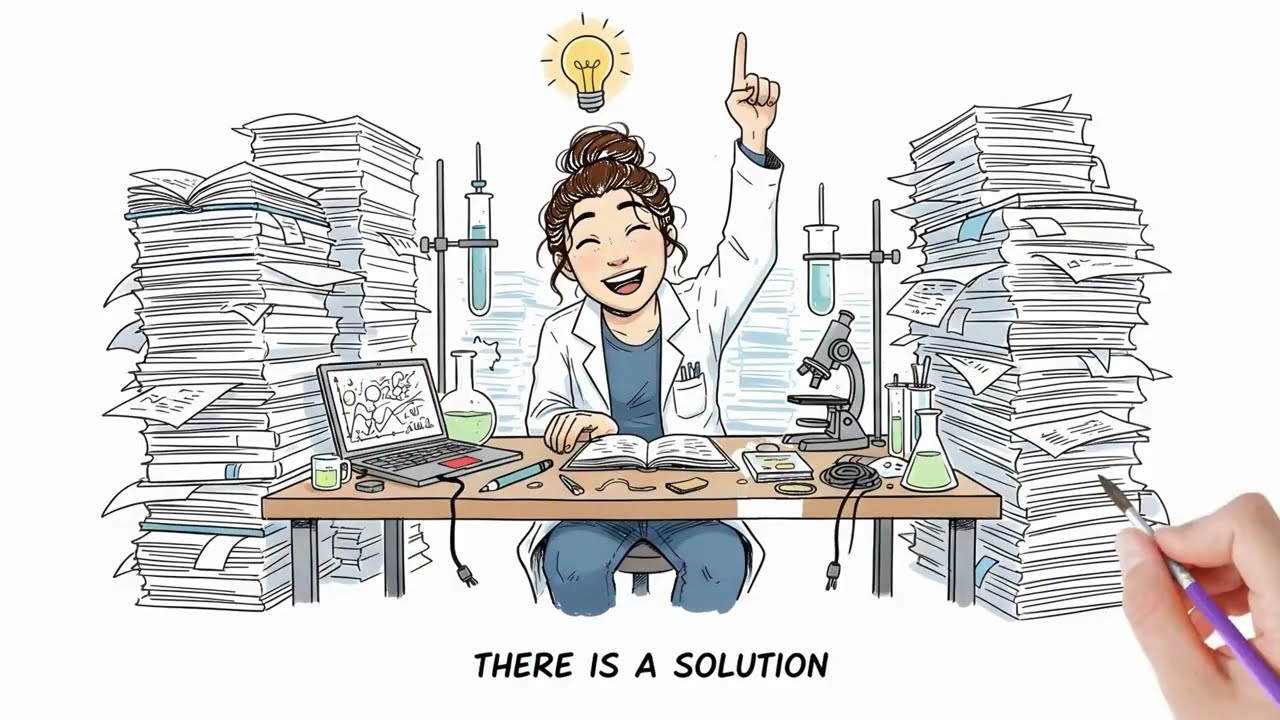
A Researcher's Journey with Soφ AI: Review of The AI That Promises a Revolution in My Healthcare Research Lab
Struggling with tedious lab protocols and failed experiments? As a biomedical researcher, I was too, until I discovered Soφ AI. This isn't just another AI tool; it's a revolutionary lab assistant that has transformed my research. From generating customized protocols in minutes to troubleshooting experiments and even generating novel hypotheses, Soφ AI is the partner every researcher dreams of. Read my personal review to see how this game-changing AI can supercharge your resea
Sep 3, 20254 min read
bottom of page